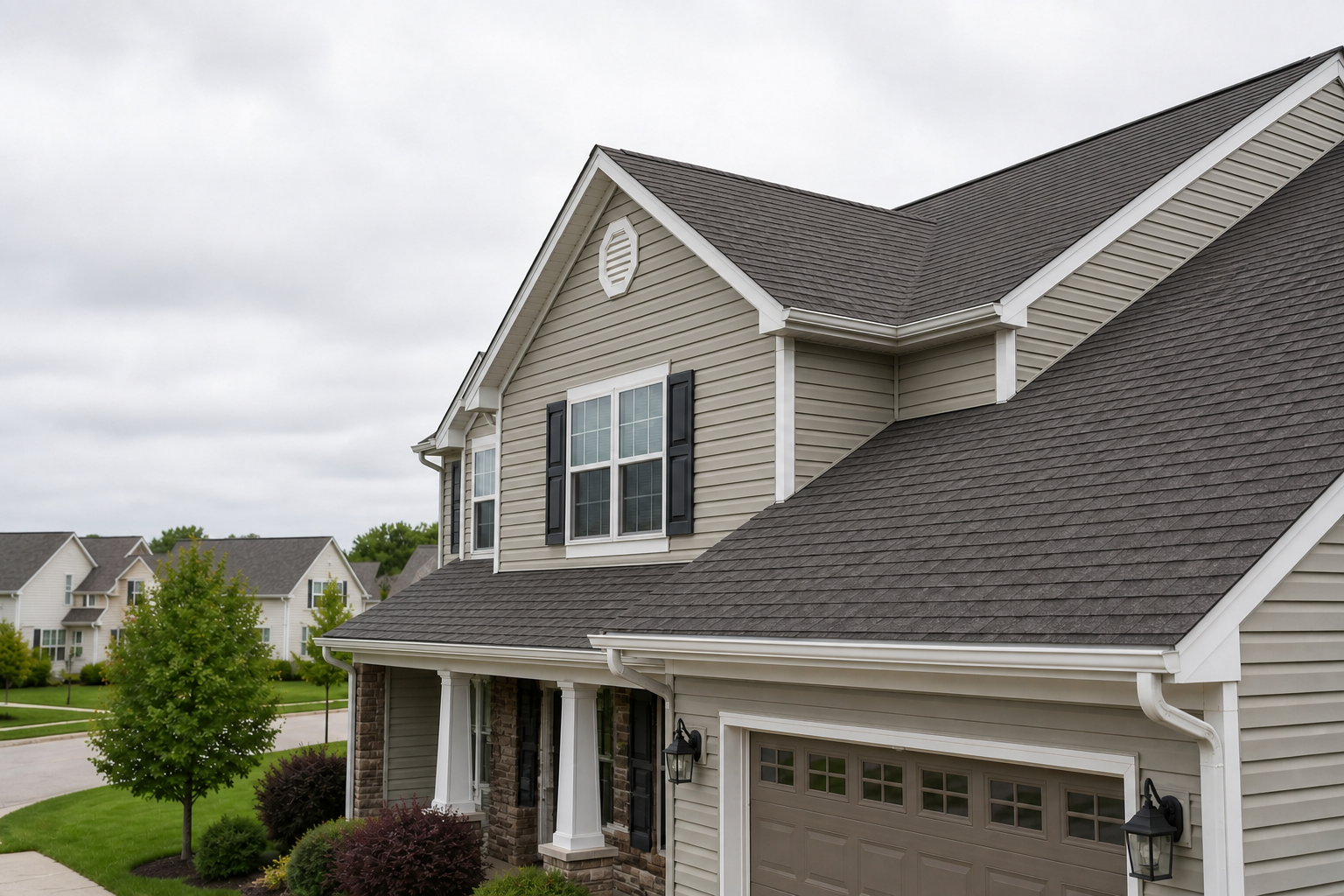
Sizing gutters to the roof
A steep roof with a large surface area sheds water fast during a Richmond downpour, and a standard five inch gutter can overflow at the corners during the heaviest storms if the roof pitch and square footage were not accounted for. Six inch gutters with oversized downspouts are common on larger roofs for exactly that reason.
Gutters are hung with a slight pitch toward the downspouts, checked with a level rather than by eye, so water actually moves instead of sitting and rusting seams or growing algae.
Repair versus replacement
Sagging sections, separated seams and downspouts pulling away from the fascia are usually a repair, not a full replacement, as long as the fascia board underneath is still solid. Rotted fascia changes that calculation, since new gutters hung on soft wood will sag again within a season or two.
Clogged gutters that have overflowed for a season sometimes damage the fascia and the roof edge underneath before anyone notices, which is why a gutter call often turns into a small roof repair once the hangers come off.
Keeping water away from the foundation
Downspouts that dump water two feet from the foundation defeat most of the purpose of having gutters at all, especially on Richmond's clay heavy soil which drains slowly and expands when saturated. Extensions or buried drain lines routed to daylight or a dry well solve this without the homeowner having to regrade the whole yard.
Gutter guards and seasonal maintenance
A property under heavy tree cover, common in Midlothian and parts of Bon Air, generates enough leaf and seed litter that gutters can clog within a single season without some form of guard. Screen and mesh style guards cut down on that buildup significantly, though none of them eliminate cleaning entirely.
Gutters without guards on a heavily wooded lot generally need clearing at least twice a year, in late spring after seed drop and again in late fall after leaf drop, to keep them functioning through the next round of storms.